

Container Ships Are Heading Back to the Red Sea — Here's What It Means for Your China-to-Bangladesh Shipments
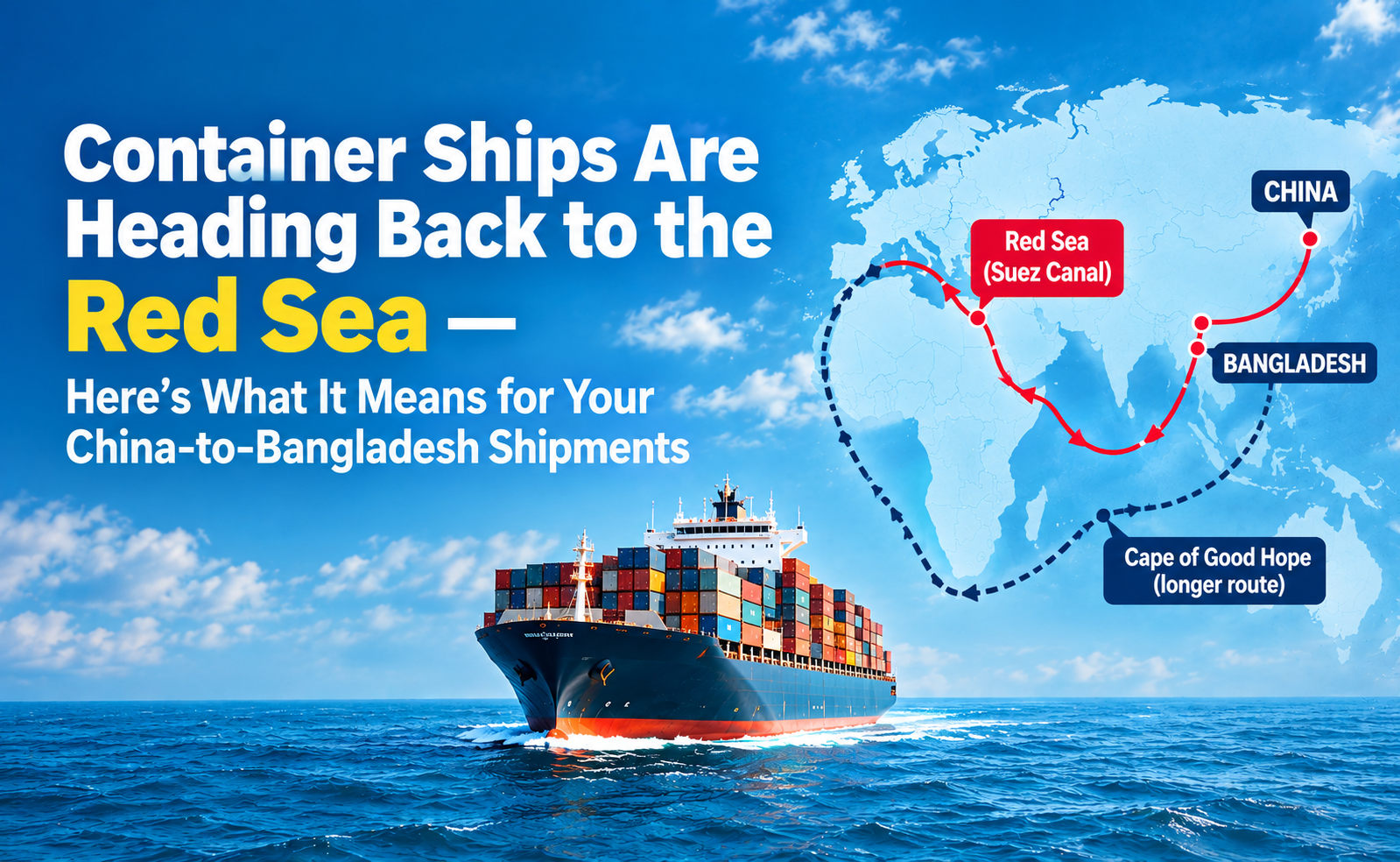
Major carriers like Maersk and Hapag-Lloyd are finally returning to the Red Sea route after 2.5 years of costly detours — but the last attempt at normalization collapsed within months, so nothing's guaranteed. Here's what the shift could mean for freight rates, port congestion, and booking strategy on China-to-Bangladesh shipments.
Major carriers like Maersk and Hapag-Lloyd are finally returning to the Red Sea route after 2.5 years of costly detours — but the last attempt at normalization collapsed within months, so nothing's guaranteed. Here's what the shift could mean for freight rates, port congestion, and booking strategy on China-to-Bangladesh shipments.
If you import from China, you have been receiving the same explanation for the past two years on why sea freight is slow and expensive: "Ships are avoiding the Red Sea." That era may be coming to an end, but not in a clean, simple fashion—and the fallout could have a direct impact on your next FCL or LCL shipment.
What Just Happened
By mid-September 2026, major carriers such as Hapag-Lloyd and Maersk started returning selected Asia–Europe services to the Suez Canal route via the Red Sea. This marks a shift after nearly two-and-a-half years during which almost all major container lines rerouted around the Cape of Good Hope in southern Africa. That detour had been standard operating procedure since Houthi attacks on commercial vessels began in late 2023, adding 10–14 extra days and thousands of nautical miles to voyages between Asia and Europe.
Some carriers have been quicker than others. CMA CGM was among the first to commit, restoring full Red Sea transits on selected services and cutting round-trip times by weeks. Maersk has been more cautious, testing unannounced transits before formally announcing its return. Others, concerned about war-risk insurance and crew safety, are keeping their vessels on the longer Cape route for now.
Why This Isn't a Simple "Good News" Story
Here is the twist that makes this genuinely worth watching, rather than just another shipping headline: this isn't the first time a return looked imminent. Previous normalization efforts were derailed as fears over regional stability were stoked by military escalations, sending carriers back to the Cape route. That whiplash is precisely why industry analysts are cautioning shippers not to assume this latest wave of returns will hold.
- Capacity is freed—with caveats: Omitting the Cape detour makes vessels available sooner for other routes, helping alleviate container equipment shortages.
- Risk of port congestion: Too many carriers reverting to Suez simultaneously could create backlogs at regional hub ports similar to pandemic-era bottlenecks.
- Rates could swing either way: Shorter routes cut bunker fuel and charter costs, which could pull freight rates down—or spike them temporarily if transshipment congestion hits first.
- No firm timeline: Carriers explicitly note that geopolitical conditions could reverse routing decisions overnight.
What This Means If You're Shipping China to Bangladesh
The primary ocean container route for Northern Logistics sails from Chinese seaports to Chittagong Port—not through the Red Sea corridor. So why does this affect Bangladeshi importers?
1. Capacity ripples across all Asian trade lanes. Container shipping is not siloed. When major alliances shift vessels and empty 20ft/40ft containers between Asia–Europe and intra-Asia trades, equipment availability on feeder lanes serving Chittagong responds within weeks.
2. Rate volatility is back. Large-scale Suez normalization could begin pulling global ocean rates down for FCL and LCL importers, while short-term transshipment bunching in Singapore or Colombo can trigger temporary surcharges.
3. Early booking matters more than ever. Securing vessel space early—especially for FCL consignments of industrial machinery, bulk fabric, or commercial hardware—protects you against sudden rate jumps or blank sailings.
4. Consolidation is a smart hedge. For medium and multi-vendor orders, LCL and China warehouse consolidation in Guangzhou or Yiwu reduce exposure to single-container rate swings while keeping inventory moving steadily.
The Bottom Line
The shipping world is watching the Red Sea closely right now, and whether this return holds, stalls, or reverses will shape ocean freight costs and container capacity well into 2027. The smart move for Bangladeshi importers is to partner with a forwarder tracking carrier schedules in real time.
Looking to ship cargo from China soon? Reach out to Northern Logistics International before you book—we monitor carrier space and port schedules daily to time your FCL, LCL, or turnkey door-to-door shipment for the best rate and transit window.
Sources: Seatrade Maritime News, Xeneta, Container News, ING Think, SCA Global Logistics — September 2026.
