

Bangladesh's First Deep Sea Port Is Almost Here, and It Could Change How Your Cargo Moves From China
Bangladesh's first deep-sea port, Matarbari, is set to open in 2026, aiming to fix the capacity limits that have long forced Chittagong-bound cargo through feeder ships and transshipment hubs. Here's what it means for FCL, LCL, and door-to-door transit reliability on the China-Bangladesh corridor.
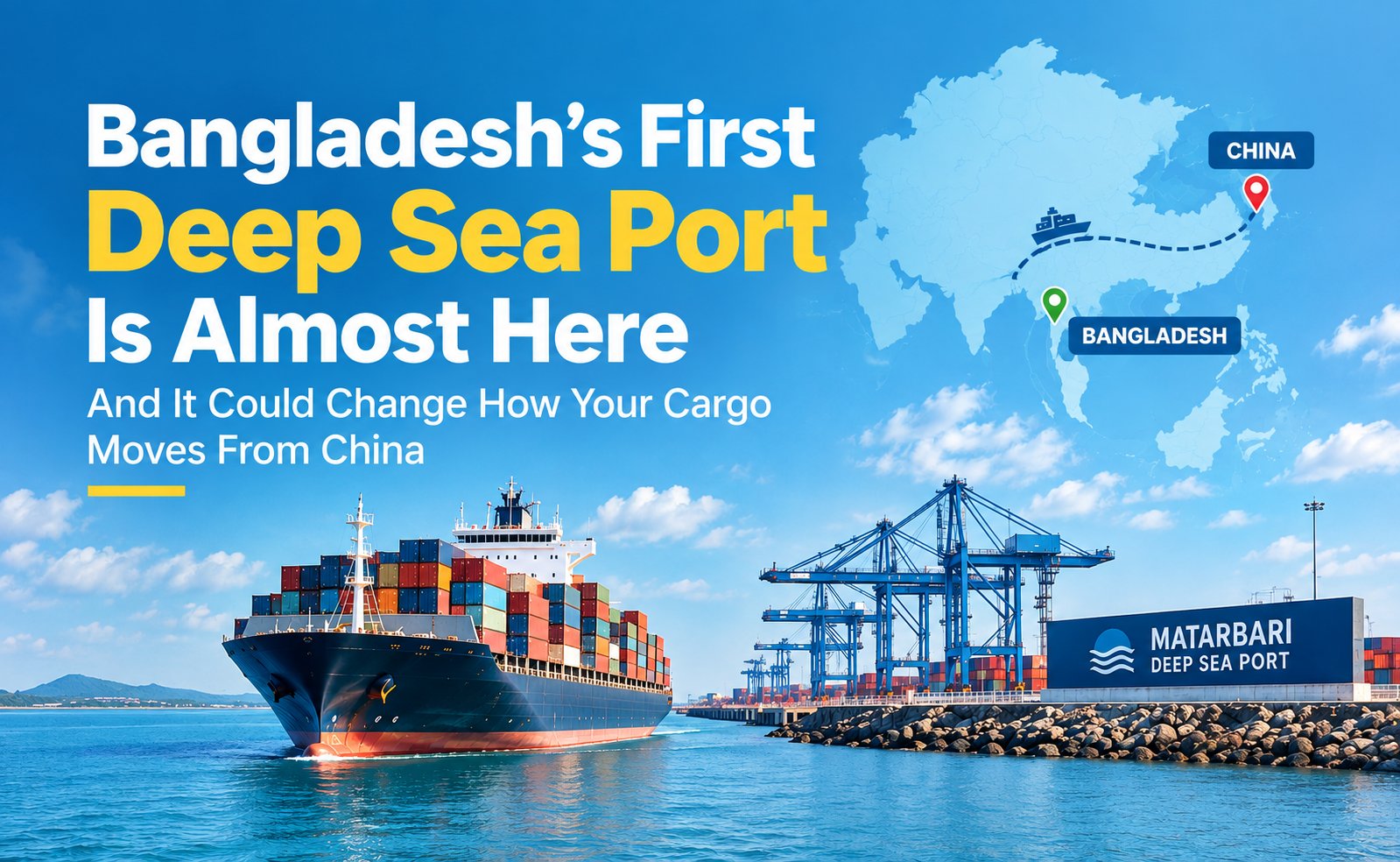
Bangladesh's first deep-sea port, Matarbari, is set to open in 2026, aiming to fix the capacity limits that have long forced Chittagong-bound cargo through feeder ships and transshipment hubs. Here's what it means for FCL, LCL, and door-to-door transit reliability on the China-Bangladesh corridor.
For decades, every container ship carrying goods from China to Bangladesh has run into the same bottleneck: Chittagong Port. It's the country's main gateway, but it was never built to handle today's larger container vessels. That limitation has quietly shaped shipping costs, transit times, and delays across the entire China-Bangladesh trade corridor. That's about to change. Bangladesh's first deep sea port, Matarbari, is set to open its container terminal in 2026, and it's one of the biggest shipping infrastructure stories in the region this year.
Why Chittagong Port Has Been a Bottleneck
Chittagong Port has a structural problem: its channel isn't deep enough for the larger mainline vessels that now dominate global container shipping. Because of that, big shipping lines have increasingly turned to feeder services instead, smaller ships that shuttle containers between Chittagong and bigger transshipment hubs like Singapore rather than sailing there directly.
That extra hop adds real cost and time. Cargo owners lose control over sailing schedules, connections to mainline vessels get missed, and delays pile up from there. During the worst stretches of congestion, container yards at Chittagong have filled up faster than they could clear, at one point holding over 44,000 TEUs against a storage capacity closer to 37,000, while ships waited days at anchorage just to get a berth. Carriers have even added congestion surcharges of around $150 per TEU to cover the cost of those delays.
There's some good news right now. As of mid-September 2026, Chittagong's congestion index is actually low, and median vessel waiting times are down significantly week over week. But the underlying capacity problem hasn't gone away. It's just being managed for the moment.
Enter Matarbari: Bangladesh's First Deep-Sea Port
Matarbari Port, located in Cox's Bazar and built with support from the Japan International Cooperation Agency, is designed to solve exactly this problem. Modeled on Japanese ports, it will be Bangladesh's first true deep-sea port, with a channel deep enough to berth vessels carrying up to 8,000 TEUs, a scale Chittagong simply can't handle. Its first-stage container terminal is planned for completion this year, along with a multipurpose terminal for other cargo types.
The goal is simple: take pressure off Chittagong by giving larger mainline vessels a direct route into Bangladesh, cutting out the feeder-and-transship detour through hubs like Singapore. Supporting infrastructure is being built alongside it too, including highway upgrades along the Chittagong-Cox's Bazar corridor meant specifically to handle the freight traffic Matarbari is expected to bring once it's fully running.
What This Means for Businesses Shipping From China to Bangladesh
Fewer forced transshipments over time. As Matarbari comes online and larger vessels get a direct berthing option, the shift toward feeder services that has added days to transit times could start to reverse. That means more direct sailings and fewer missed mainline connections for FCL cargo.
More predictable transit times for FCL shipments. Congestion-driven delays have always been the biggest wildcard in China-to-Bangladesh transit planning. A second deep sea port gives the country more capacity to absorb demand spikes, like the post-holiday cargo surges that have caused congestion before, without the whole trade lane grinding to a halt.
Long-term downward pressure on surcharges. Congestion surcharges exist because carriers are covering the extra cost of delay. As capacity constraints ease, there's less reason for those add-on fees to stick around, which is good news for anyone budgeting FCL or LCL freight costs from Chinese ports into Bangladesh.
Door-to-door shipping becomes easier to plan around. For businesses relying on turnkey door-to-door cargo service, port-level unpredictability has always been the hardest thing to account for. A more resilient, multi-port system in Bangladesh means forwarders can build more accurate delivery timelines from end to end, from the factory floor in China to final delivery in Dhaka or Chattogram.
The Timeline to Watch
Matarbari's container terminal is targeted for initial operation in 2026, but full capacity, direct mainline vessel calls, and supporting road infrastructure will roll out in phases over the next few years. For now, Chittagong remains the primary gateway for most China-Bangladesh ocean container freight, which is exactly why the current low congestion levels are worth taking advantage of if you're planning shipments in the coming months.
The Bottom Line
Matarbari won't solve Bangladesh's port capacity challenges overnight, but it's the most significant shift in the country's container shipping infrastructure in decades, and it's arriving at a moment when Chittagong congestion is already trending in the right direction. For importers and exporters on the China-Bangladesh lane, that combination makes now a strong time to ship, while also being a story worth watching closely as Matarbari scales up.
Planning a shipment from China to Bangladesh? Contact Northern Logistics International — our team tracks port conditions on both sides of this route daily, so your FCL, LCL, or door-to-door shipment moves on the most reliable timeline available right now.
Sources: Portcast, Wikipedia (Matarbari Port, N1 Bangladesh), The Daily Star, The Loadstar, Preparatory Survey on Matarbari Port Development Project, 2026.
